

Monsplasty: 3 stages of tissue healing and recovery
Monsplasty: 3 stages of tissue healing and recovery
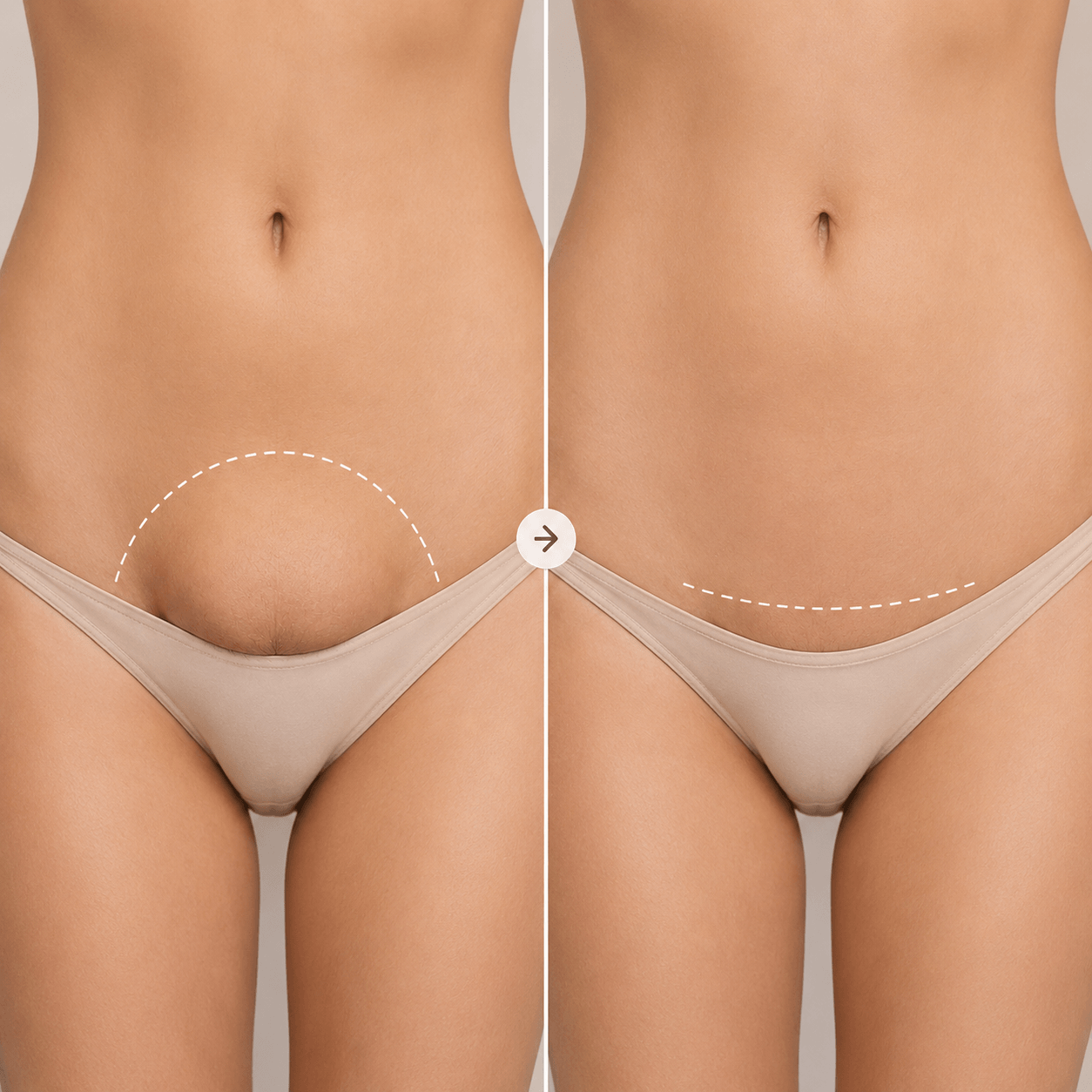
A monsplasty is a specialized surgical procedure designed to reduce, reshape, and lift the mons pubis, which is the fatty tissue located over the pubic bone.
From a biological perspective, this treatment addresses the accumulation of stubborn adipose tissue and sagging skin caused by significant weight fluctuations, aging, or genetic predispositions.
Understanding the clinical mechanism of a monsplasty involves analyzing three primary physiological outcomes:
Adhering to these biological phases guarantees that the structural integrity of the lower abdominal region is maintained, supporting a safe transition to the final aesthetic outcome.
- Reduction of excess adipose tissue: Surgical removal or targeted liposuction eliminates deep fat deposits that resist diet and exercise programs.
- Elimination of redundant skin: Excising loose tissue tightens the supportive cutaneous layer, restoring a firmer contour to the lower abdominal region.
- Structural lift and realignment: Anchoring the underlying fascia to the supportive abdominal wall prevents future gravitational descent of the tissue.
Monsplasty: The physiological timeline of tissue recovery
To evaluate the long-term efficacy of the procedure, it is essential to trace the biological adjustments occurring beneath the skin surface after a monsplasty. When excess tissue is removed, the vascular network must adapt to the newly contoured area. Experienced plastic surgeons performing a monsplasty utilize advanced incision closure methods aimed at minimizing scars, directing healing factors and fibroblasts to synthesize new structural collagen while securing the tissue layers. During the initial weeks, protecting this cellular matrix from mechanical stress is critical for preventing complications such as fluid accumulation or wound separation. Closely adhering to clinical advice and avoiding strenuous activities supports the deep tissue remodeling process, ensuring that the final contour remains symmetrical and firmly anchored. The systemic responses and corresponding care guidelines across different postoperative intervals are structured below:| Recovery Phase | Biological Tissue Reaction | Clinical Observations | Postoperative Care Protocol |
|---|---|---|---|
| Days 1 to 7 | Coagulation cascade completes; localized swelling initiates as extracellular fluid accumulates. | Mild bruising, swelling, and temporary alterations in skin sensation. | Utilize continuous compression garments and avoid bending movements. |
| Weeks 2 to 4 | Angiogenesis establishes new capillaries; fibroblast activity peaks at the incision site. | Swelling gradually subsides; tissue begins to feel softer and more uniform. | Engage in light walking to encourage lymphatic drainage; avoid lifting weights. |
| Month 3 and Beyond | Collagen maturation realigns the fibers; the scar tissue flattens and fades. | The contour stabilizes, revealing firm, anatomically proportional results. | Resume full physical activities and apply targeted scar care management. |
The role of compression therapy in lymphatic regulation
Following a monsplasty, the dead space created by the removal of adipose tissue requires external support to heal without fluid retention. Medical professionals implement compression therapy through specialized medical garments to apply uniform pressure over the treated area. This mechanical support limits the accumulation of interstitial fluid, reducing postoperative edema and supporting the lymphatic system. Furthermore, consistent compression keeps the newly adapted tissue layers in close approximation, which accelerates cellular adhesion and minimizes the risk of contour irregularities. This simple clinical intervention remains a cornerstone of successful postoperative tissue integration.Conclusions: Restoring contour and comfort through precision
In conclusion, a monsplasty provides a definitive surgical solution for correcting tissue laxity compared to alternative cosmetic procedures and restoring proportional contours to the lower pelvic area. By respecting the biological requirements of the healing cells and following precise clinical guidelines, patients can achieve long-term functional comfort and a naturally balanced anatomical profile.01
Vitamin A und Haarausfall: Den Zusammenhang verstehen
Vitamin A ist ein lebenswichtiger Nährstoff für die Haargesundheit und spielt eine entscheidende Rolle bei der Ernährung der Kopfhaut, der Funktion der Haarfollikel und dem allgemeinen Haarwachstum.

