

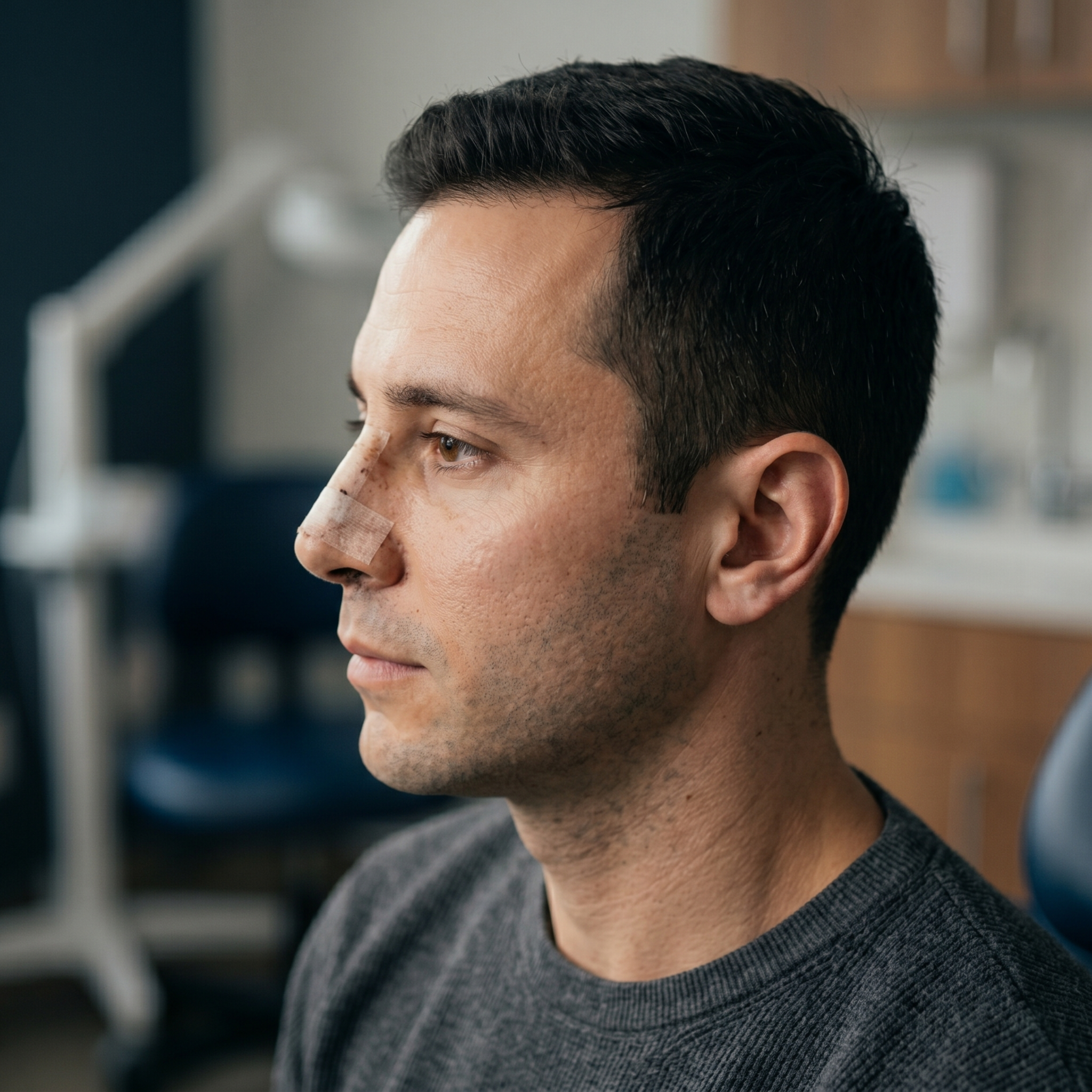
Anatomical considerations in male nose surgery
The foundation of a successful male nose surgery lies in a profound understanding of the anatomical differences between the male and female nose. Surgeons must respect these differences to avoid feminizing the male face, which is a common concern among male patients. The goal is to create a nose that appears unoperated and sits in perfect balance with the forehead, chin, and cheekbones.Skin thickness and soft tissue envelope
One of the most critical factors in male nose surgery is the thickness of the skin. Men generally have a thicker sebaceous skin layer, particularly in the lower third of the nose. While thicker skin is more resilient, it can also mask the fine structural changes made to the underlying cartilage. This requires the surgeon to use more substantial grafting techniques to ensure that the new definition is visible. Conversely, thick skin is better at hiding minor irregularities, but it often leads to prolonged postoperative swelling, which must be managed through specific clinical protocols during the recovery phase.Bony and cartilaginous framework
The skeletal structure of the male nose is typically larger and more prominent than that of the female. The nasal bones are denser, and the septal cartilage is often thicker and more abundant. In male nose surgery, the management of the dorsal hump requires a conservative approach to avoid an overly scooped or concave bridge, which can detract from a masculine appearance. The objective is usually to maintain a straight or slightly convex profile, reinforcing the strength and character of the face.Aesthetic objectives: defining the masculine profile
In male nose surgery, aesthetic success is measured by how well the new nose integrates with the patient’s existing facial features. There are specific angles and proportions that are traditionally associated with a masculine aesthetic, and these serve as the blueprint for the surgical plan.The nasolabial and nasofrontal angles
The nasolabial angle is the angle between the upper lip and the base of the nose. In men, this angle should ideally be between 90 and 95 degrees. Anything beyond 100 degrees can lead to an upturned appearance that is often perceived as feminine. Similarly, the nasofrontal angle—where the nose meets the forehead—should be well-defined but not overly deep. Preserving these angles ensures that the results of male nose surgery appear natural and harmonious with the rest of the male facial structure.Tip definition and projection
The tip of a man’s nose should be strong and well-supported. In male nose surgery, surgeons often focus on achieving refined strength rather than delicate refinement. This involves ensuring the tip is not too narrow or pinched. Proper projection—the distance the nose sticks out from the face—is also vital. An under-projected nose can make the chin appear too large, while an over-projected nose can dominate the face. Precision in tip surgery is achieved through advanced suturing techniques and the strategic use of cartilage grafts.Surgical techniques: open versus closed rhinoplasty
The choice of surgical approach in male nose surgery depends on the complexity of the case and the specific goals of the patient. Both open and closed techniques have their advantages, and the selection is made during the preoperative planning phase.The open approach for complex reconstruction
Open rhinoplasty involves a small incision across the columella, the narrow strip of tissue separating the nostrils. This allows the surgeon to fully lift the skin and visualize the entire nasal framework. In male nose surgery, the open approach is often preferred for complex cases involving significant trauma, severe deviations, or the need for extensive grafting. The direct visualization provided by this technique allows for unparalleled precision in reshaping the cartilage and securing grafts.The closed approach for refinement
Closed rhinoplasty, or endonasal rhinoplasty, involves incisions made entirely inside the nostrils. This technique leaves no visible external scars and typically results in less postoperative swelling. It is an excellent choice for male nose surgery when the primary goals are dorsal hump reduction or minor tip adjustments. While it offers less visualization than the open approach, a skilled surgeon can achieve exceptional results with a shorter recovery time.| Technical Feature | Open Rhinoplasty | Closed Rhinoplasty |
| Incision Location | External (Columella) and Internal. | Internal only (Endonasal). |
| Visualization | Full exposure of nasal framework. | Limited visualization. |
| Surgical Precision | Highest for complex grafting. | Excellent for contouring. |
| Recovery Time | Slightly longer initial swelling. | Generally faster recovery. |

